Thursday, June 30, 2022

#182 / Slow Riot


David French, writing for The Atlantic, says that we don't have any strategy that is likely to stop the cascade of mass shootings that seem to have been occurring  around the country in ever greater frequency:

A Rand Corporation review of studies of the effects of 18 policies designed to address mass killings... "found no qualifying studies showing that any of the 18 policies ... investigated decreased mass shootings.” To be clear, for nine of the policies (including red-flag laws and arming teachers), there were no studies that met Rand’s standards for quality and rigor. We don’t know the effects of those policies on the present crisis. It’s too soon to tell.

But nine policies were rigorously studied, and they include many of the most popular gun-control proposals in America, including background checks, bans on the sale of assault weapons and large-capacity magazines, minimum age requirements, and waiting periods. This finding is consistent with a famous fact-check by The Washington Post’s Glenn Kessler, where he found that neither enhanced background checks nor assault-weapons bans would have prevented recent, deadly mass shootings. 
 
Here is what French concludes. We have, in fact, a "slow riot," as described by Malcolm Gladwell some years ago:

In 2015 Malcolm Gladwell wrote the single best, most insightful, and most sobering work yet written about mass shootings. The piece is complex, but the thesis is relatively simple—the United States is in the midst of something like a slow-motion riot, where each mass shooter is lowering the threshold for the next. The Columbine murders kicked off the “riot,” and we’ve been living with the consequences ever since.
Gladwell relied heavily on the work of Stanford sociologist Mark Granovetter, and Granovetter argues that it’s a mistake to view each incident on its own: In his view, a riot was not a collection of individuals, each of whom arrived independently at the decision to break windows. A riot was a social process, in which people did things in reaction to and in combination with those around them. Social processes are driven by our thresholds—which he defined as the number of people who need to be doing some activity before we agree to join them. 
 
The "slow riot" theory is another example of the idea that we tend to do what is expected. French makes clear that something pretty much like what Granovetter describes is, in fact, exactly what is happening. The example provided by one mass shooting helps stimulate the next one. It's hard to know exactly how to turn the principle in a positive direction, in the case of mass shootings. 

Still, hard as it may be to know how to accomplish what we need to do, we do need to be working on turning a "vicious circle" into a "virtuous circle." We need to "expect" something different from each one of us, and one way to try to generate a new dynamic is to start "expecting" social solidarity and support, as opposed to our expectations that it's "every person for themself." 

When we think it's acceptable for poor people to sleep in drainage ditches, and along freeways, and on the banks of the river - and that's what we expect to see when we leave our own homes - we are telling everyone that no one cares about anyone's personal problems - even when they are dire. We are telling everyone that no one should expect any help or assistance, with any problem that a person might have.

That could lead people to cease caring about others, since caring about others is not what anyone should expect. That could lead people to kill other people, since.... Why not?

Social solidarity - providing "mutual aid" until everyone actually "expects" it - could help change the direction of the cumulative and circular causation now making things, every day, worse. Mutual aid could help "bend the arc." At least, maybe it could. Maybe it would help reduce the examples of mass shootings, until the "slow riot" simply dies away.
 
More social solidarity as a way to stop mass shootings? I'd say it's worth a try!


Image Credit:
https://newsletters.theatlantic.com/the-third-rail/629a49b29503360021895e95/gun-control-debate-uvalde-school-shooting/


Wednesday, June 29, 2022

#181 / "Truth" Versus "Opinion"


I am writing this blog item on June 10, 2022, but it is scheduled to appear online on June 29th. Consider this blog posting to be a cordial invitation to make a contribution to the Hannah Arendt Center, and then to join the "Hannah Arendt Virtual Reading Group," which will be meeting this coming Friday, on July 1st, and which will have a discussion on that day about the book pictured above. The Virtual Reading Group is led by Roger Berkowitz, the Academic Director and Founder of the Hannah Arendt Center For Politics And Humanities, located at Bard College, in upstate New York.  

This note has been stimulated by the Virtual Reading Group discussion that took place on June 10th. That session also discussed The Last Interview, and one of the central discussion points was the difference between "philosophy" and "political theory." Arendt refused to be categorized as a "philosopher," and, in fact, criticized philosophy for having some rather destructive effects. Why?
 
Arendt believed that "philosophy" makes an implicit claim that it is supposed to, and can, discover the "truth" about things, and that this is a mistaken quest. Much mischief can ensue when those in power think they know the "Truth." In fact, Arendt says, there is no "Truth" in the political world we most immediately inhabit; there are only various "opinions." The proper work for us all, including specifically intellectuals, is not to try to discover what is "right," and what is "wrong," what is "true" and what is not, but to seek out ways to "reconcile" the various opinions that are inevitable in this world of plurality, with the objective of finding ways that we can live together (which is our inevitable fate).
 
My "Two Worlds Hypothesis," points out that all human beings live in, and have access to, what amount to two different "worlds." First, of course, we live in the "World of Nature," into which we have been most mysteriously born. At the same time, we most immediately inhabit a "Political World" that is the result of human action and choice. Sometime after I came up with this way to trying to explain our human situation (what Arendt calls The Human Condition, in one of her most important books), I realized that I had actually gotten this idea, in large part, from Arendt, although my familiarity with and love for her work was not the immediate cause of my formulation. 

In the "World of Nature," there is, in fact, a "Truth," with a capital "T." The "Laws of Nature" do state what must and will happen. The Law of Gravity does not change, depending on one's opinion. In our "Political World," though, the "Human World" that we create ourselves, "anything is possible" (both wonderful and horrible things), and our opinions about what we should do, when backed with action, establish the "realities" we then confront both individually and collectively. 

Anyone seriously thinking about "what should we do, now?" (and we all definitely need to be thinking about that) would benefit, I believe, from hearing what Hannah Arendt has to say about this primary question. Her voice is still speaking to us in the Virtual Reading Group.

So, to repeat myself, here is a cordial invitation to become a member of the Hannah Arendt Center, and to join the conversation that the Virtual Reading Group provides!


Image Credits:
https://hac.bard.edu/programs/vrg/
 

Tuesday, June 28, 2022

#180 / Sheryl Sandberg's T-Shirt Slogan


Sheryl Sandberg is pictured to the left. That is Mark Zuckerberg on the right. I presume that you know who they are, and that my identification was actually unnecessary. We used to be able to call Zuckerberg and Sandberg the "first family of Facebook," but times are changing. "Facebook" has now become "Meta Platforms," which means that my nice little piece of alliteration is gone. Besides, Sheryl Sandberg will soon be gone, too. 
 
As we have been told by The New York Times, "Ms. Sandberg, 52, has increasingly lowered her profile as Mr. Zuckerberg has taken over more of her responsibilities and reorganized the company for its new chapter. On Wednesday [June 1st], Ms. Sandberg said she was leaving Meta — which also owns Instagram, WhatsApp and Messenger...."

The picture I have at the top of this blog posting can't be found in the online version of that June 1, 2022, article I just quoted, though it accompanied the hard-copy version of the article. I tracked the picture down, online, in an earlier Times' article that ran on October 5, 2021. That earlier article reported on a weekslong scandal that engulfed the company after a whistle-blower leaked documents showing that the social network had studied and understood the harmful effects of its products. In that 2021 article, The Times' told its readers about a video that was intended to make Facebook/Meta look good, without ever directly responding to what the whistleblower said. 
 
Considering the context in which it first appeared, that "Just Love" advisory on Sandberg's T-Shirt does seem like an appropriate adornment for an article about how the massive corporation was trying to divert attention from informed allegations that it intentionally visited harm on its users, in its never-ceasing quest to maximize profits. "Just Love!" A clever diversion! Just chalk it up to another maneuver by that "billionaire class" I have been highlighting, most recently

At any rate, I did notice the "Just Love" slogan when I read the June 1st article about Sandberg's departure from Meta Platforms. The photo made me think whether I agreed that "Just Love" is enough. The Beatles would seem to have signed on to that assertion. You remember, I am sure, that the Beatles have famously told us that "all you need is love." But is that true? The Beatles repeat the claim almost excessively as the song fades out
 
Love is all you need
 
I am not sure that we can trust either The Beatles or Sandberg to have given us the real truth in their claim that "love is all you need." We definitely need love! But is it really enough, all by itself? Is it really "all we need?"
 
As I started thinking about this question, prompted by the picture of the slogan on Sandberg's T-Shirt, I started focusing on that very first word, "just." That word, of course, can mean, as the dictionary tells us, "only," which is pretty clearly the way The Beatles would have understood the slogan. "Just Love" is simply another way to say that "Love is all you need." This is the thought, I am pretty sure, that the Sandberg T-Shirt means to convey.
 
But there are a lot of other meanings for "just," too, which you can find if you click this link to review all the definitions that the dictionary lists. "Just" love could mean "righteous" love; it could mean "deserved" love; it could mean "proper" or "reasonable" love. 
 
If could mean, the way I see it, a love that results in a "just" result. Read that way, the slogan tells us that what we really need is not only love, but justice. That's where I am going with the "Just Love" slogan.
 
So, here's my thought: let's not be fooled! We can't really have love without justice! Love and Justice: they are both required!

With apologies to The Beatles (I'm sorry, you guys), love is not "all we need." Love and Justice. That's what we need. That's what we need to insist upon when we deal with the billionaire class.
 
 
Image Credit:
https://www.nytimes.com/2021/10/05/technology/mark-zuckerberg-sheryl-sandberg-facebook-whistleblower.html

#179 / Organizing Around Demands


Yesterday, my blog posting suggested that we could improve our politics, economy, and society by getting rid of those "different rules for the rich guys." I am not the only one who has had that thought. 

Here, for example, is a link to an item by Chris Hedges, as featured in Consortium News. Hedges is a journalist (and a Presbyterian minister), and his article provides some ideas on "how to defeat the billionaire class."
 
What does Hedges suggest?
 
Well, Hedges suggests that local government is a good place to start making the needed changes. He points, specifically, to what is happening in Seattle, Washington. 
 
Having served as a local government official for twenty years - and having been involved in some successful efforts that made some pretty major changes in Santa Cruz County - I want to say that I believe that Hedges is on to something. In fact, local officials are our most "powerful" governmental officials, since it usually only takes a rather small number of them to do whatever the local government can do. 
 
Local governments can do a lot, too, since the basic power of any local government is to provide for the health, safety, welfare, and morals of the local community. In Santa Cruz County, we did it with just three votes! You needed four votes at the Santa Cruz City Council. Three or four is an attainable number. The odds aren't nearly as good at the state level, where if you want to change the law you need at least forty-one votes in the Assembly, and twenty-one votes in the State Senate, plus the approval of the Governor. The odds are really bad at the federal level!

Hedges also has another very good piece of advice. He quotes Seattle City Council Member Kshama Sawant as follows:
Campaigns need to be organized around demands, not around personality politics.  
The way to run a strong electoral campaign is to completely reject personality politics, completely reject careerism, and build political organizations like Socialist Alternative. Except we need far bigger organizations where we can hold our elected representatives and other leaders in the organization accountable in the program of demands that we are fighting around. This becomes the central focus, not those individuals who could then use those positions to build their own careers by making themselves useful to the ruling class. That’s what we need to reject.
 
Building political power by "organizing around demands," and starting at the local government level, is a good prescription for achieving significant, fundamental change. Those precepts are a couple of good first steps towards making the billionaire class subject to democracy, as opposed to the largely prevailing current situation, in which democracy is subject to the billionaire class!


Image Credit:
https://consortiumnews.com/2022/05/31/chris-hedges-how-to-defeat-the-billionaire-class/

Monday, June 27, 2022

#178 / Different Rules For The Rich Guys


No big surprise, I suppose, that the "rich guys" get treated differently (and better) than the rest of us do. The rules that we have to follow don't always apply to them. We all know that, right? No big surprise! Still, don't you think it's infuriating?  
 
According to The Wall Street Journal, in an article published on Thursday, May 12, 2022 ("SEC Reviews Musk's Twitter File Lag"), the Securities and Exchange Commission (the SEC) is likely to give Elon Musk a "pass," after discovering that he violated SEC disclosure rules with respect to the stock purchases he made in connection with his efforts to get control of Twitter. 
 
Musk is, reportedly, the "richest guy on the planet." No surprises! When the richest guy on the planet manipulates the stock market, our official regulatory agencies just marvel at his genius. What is called "prosecutorial discretion," in the criminal law context, is likely going to be mobilized on behalf of our billionaire rule breaker. 

Here is the story: SEC rules say that persons who buy move than 5% of a company's shares must file a public form that lets the rest of the world know about that. As The Journal says, "the disclosure functions as an early sign to shareholders and companies that a significant investor could seek to control or influence a company." This is relevant because when one of those "rich guys" starts trying to buy up all the shares of a company, the value of those shares goes up. It's "supply and demand," in the stock market context. The number of shares in a company is fixed, as of any specific time, and so if there is a new "demand" for those shares (the "supply"), the price should increase. 

If Musk starts buying up Twitter shares, the price should rise, under the well-known supply and demand principle, but that's only true if those holding the shares know that there is now a new "demand" factor that could increase the value of their own holdings. 

And.... in the case of Musk's purchase of Twitter shares, the disclosure form he ultimately filed was filed at least ten (10) days after the trigger date the rules say he should have given public notice of his purchasing activities. 

NOT filing the required notice when he should have filed it means that "Musk likely saved more than $143 million." That amount of money, effectively, was transferred from the holders of the shares that Mr. Musk obtained, and basically went to benefit Musk alone, instead of being more equitably distributed to the then-current shareholders. Who were those shareholders? The Wall Street Journal doesn't name any names. After all, they may not be "rich guys," like Musk. It could be, in fact, that you and I were among the victimized. Many very ordinary, non-rich people have retirement accounts that include stock holdings, including in the somewhat more risky "tech sector." So, Musk definitely benefited by breaking the SEC rules. You and I, or people like us, were the $143 million losers. 

You are reading this blog posting (if you are) because of the following statements made in The Wall Street Journal story:
 
“The case is easy. It’s straightforward. But whether they’re going to pick that battle with Elon is another question,” said Dr. Taylor, referring to the prospect of a regulatory lawsuit against the outspoken entrepreneur. 
The SEC could drop its investigation without bringing civil claims, as not every probe results in formal action. An SEC lawsuit against Mr. Musk would be unlikely to derail the Twitter deal because the company’s board of directors has endorsed it and the SEC generally lacks the power to stop mergers or take-private transactions, said Jill E. Fisch, a securities and corporate law professor at the University of Pennsylvania Law School. 
Regulators could seek a court order preventing Mr. Musk from voting shares he acquired without proper disclosure, but the SEC generally hasn’t pursued that remedy, Ms. Fisch said. 
 
The article goes on, to detail more of Musk's stock market machinations. It may be that The Journal's investigative journalism, in this case, will mean some penalties for Musk. But, frankly, it doesn't look like that's going to happen, based on what I deduce from The Journal's reporting. 

So, the rules seem to be different for the "rich guys." No surprises, right?

No surprises, but don't you think it's infuriating? 

Don't you think we should be doing something about it?
 
 
Image Credit:
https://www.vanityfair.com/news/2022/05/elon-musk-multibillionaire-friends-buy-twitter


Sunday, June 26, 2022

#177 / "Everyday Patriotism" And Democracy


In an article in the April 16-17, 2022, edition of The Wall Street Journal, Yascha Mounk talks about "diverse democracies." What Mounk is talking about, in using that term, is societies that are attempting to maintain democratic governmental systems, despite the fact that the society is characterized by significant ethnic or religious differences. Mounk thinks that this is a challenge, and that there is a problem upholding a commitment to "democracy" when "diversity" is the rule. As he frames his concern, "Do the citizens of deeply diverse countries like the United States even have enough in common to sustain a meaningful form of collective solidarity?"
 
The United States, as we all know, is a "Nation of Immigrants." Americans have no ethnic "common descent" to keep us together, and there is no common heritage or belief system that helps keep our society together, either. That poses a challenge to democratic government, the way Mounk sees it. 
 
Mounk advertises himself as "one of the world's leading experts on the crisis of liberal democracy and the rise of populism," and he has written a book entitled, The Great Experiment: Why Diverse Democracies Fall Apart and How They Can Endure. Mounk's prescription? "Everyday Patriotism." His Wall Street Journal article, in fact, is titled, "The Everyday Patriotism of Diverse Democracies." 
 
Here is how Mounk outlines his "Everyday Patriotism" argument:

In the most despairing months of World War II, when the planes of the Wehrmacht were raining bombs upon London, and the Nazis seemed destined to rule vast swaths of Europe, George Orwell set out to write about a surprising subject: the virtues of patriotism. 
Orwell was as aware of the destructive potential of nationalism as any of his compatriots ... 
But it is precisely because Orwell knew how powerfully such emotions drive politics, and how destructive they can become when they are allowed to fester, that he defended a constructive form of patriotism. “What has kept England on its feet during the past year?” he asked. In the main, he answered, it was “the atavistic emotion of patriotism.” 
Orwell’s ambivalent case for patriotism is of renewed relevance today. When cruise missiles first homed in on their targets in Kyiv, much of the world assumed that Russian troops would soon reach the Ukrainian capital. But to the astonishment of both Western intelligence analysts and the war’s architects in the Kremlin, Ukraine has so far managed to resist. Fueled by a collective determination to defend their homeland, however poor the odds, Ukrainian soldiers and civilians have been able to withstand brutal attacks by a much larger invading force. 
So how can defenders of democracy summon the power of patriotism without opening the door to prejudice and chauvinism? ... 
Forever hailing the achievements of one part of the population, ethnic nationalism doesn’t acknowledge the extent to which immigrants and their descendants shape most countries. 
The most traditional form of nationalism emphasizes common descent. Advocates of an ethnic conception of patriotism argue that most nations are rooted in the history of particular peoples and should continue to recognize those who descend from its original inhabitants as having special standing. 
But the changes of the past half-century, especially in democracies that experienced a high level of immigration, have made such an ethnic conception of nationalism impractical and destructive. Forever hailing the achievements of one part of the population, ethnic nationalism is unable to acknowledge to what extent most countries are now shaped by immigrants and their descendants. It fails to give members of modern democracies who belong to minority groups full credit for their contributions, making it far more difficult to sustain genuine solidarity in countries undergoing rapid demographic change. 
Philosophers and politicians who recognize that ethnic nationalism cannot provide a sensible basis for a diverse democracy, but don’t want to give up on patriotism altogether, usually make the case for a time-tested alternative: civic patriotism. To be proud to be an American, they say, is to love the ideals and institutions to which the country committed itself in the Declaration of Independence and the Constitution. 
The advantages of civic patriotism are significant. Unlike ethnic nationalism, it allows anybody who is willing to embrace a set of shared political values to become a full member of the community. So long as immigrants from such different places as Morocco, Thailand, Zimbabwe and El Salvador agree to abide by the Constitution, they should be able to live together in peace—and become as American as a White Anglo-Saxon Protestant whose forefathers arrived on these shores hundreds of years ago. 
There is also some reason to think that civic patriotism is less likely to draw countries into international conflict than ethnic forms of nationalism. A love of country that is based in a belief in the inherent superiority of one’s own ethnic or racial group provides an easy excuse for those who want to dismiss the legitimate interests of other nations. But a nation that is founded on the importance of self-determination should be able to recognize that other countries also have a legitimate interest in ruling themselves. Civic patriotism should be better able than ethnic nationalism to welcome newcomers into the fold and sustain meaningful international cooperation. 
For all of those reasons, the idea of civic patriotism strongly appeals to me. It defines nations by their highest ideals rather than their basest instincts. And it gives citizens a way to take pride in their country without indulging in bigotry or chauvinism. If I didn’t hesitate to swear an oath of citizenship when I became an American citizen five years ago, it is, in part, because I love the Declaration of Independence and the Constitution and the inspiration they have provided for civic patriotism, both at home and abroad. 
Even so, I have reluctantly come to the conclusion that civic patriotism is at best a partial answer to the question of how contemporary democracies can sustain a common national identity. Patriotism is one of the most universal sentiments in the modern world. Most citizens of democracies feel it at least to some extent. But an interest in high-flown civic ideals and civic documents remains the preserve of a politically minded minority. 
Noble though the idea may be, civic patriotism will never fully describe what most people feel when they think of their country with love or affection. In putting abstract political principles at the center of our collective sentiments, the notion of civic patriotism runs the danger of mischaracterizing a sentiment that is, at least as much, about our emotional attachment to real people and places. We need to complement the civic conception of patriotism with another dimension—one which recognizes the key role played by everyday culture... 
When people say that they love their country, they aren’t necessarily celebrating the ethnic links that unite members of the majority group. Nor need they be thinking about politics or the constitution. While politicians might, for lack of better words, invoke a lot of clichés or historical symbols when making patriotic speeches, most people arrive at their cultural patriotism by a more direct and unpretentious route. Their love of country is deeply imbued with their appreciation of its everyday sights and smells and sounds and tastes. Their affection is for the things that make up everyday life: their fields and cities, dishes and customs, buildings and cultural scripts
There is a way to invoke culture that excludes newcomers and minority groups, that values purity over inclusion. For cultural traditionalists, Italy would cease being Italy if a greater number of Italians chose not to celebrate Christmas, and India would cease being India if most Indians started to celebrate Halloween. But in a diverse democracy, culture bears the mark of many different groups. When asked about their favorite foods, Germans are now more likely to mention a “foreign” dish like spaghetti Bolognese or Döner kebab than they are to go on about a “local” dish like Schweinshaxe. And when Americans think about dishes they love, they are as likely to list pizza and tacos as they are to talk about meat loaf or apple pie (emphasis added).

I don't want to get into a disputation with Mounk, but it strikes me that he is talking about two related, but slightly different things. "Democracy" and "patriotism" can definitely be related - particularly in the real world, as opposed to the world of political theory - but while hot dogs and apple pie are a kind of "patriotic glue," as Mounk argues - and let's follow his lead and throw in tacos, and pizza, and baseball, and football, and basketball, and soccer, as well - it is what Mounk calls "civic patriotism" that I am thinking about when I consider the future of "democracy" in America.

"Everyday Patriotism" is certainly positive, and helps us learn to live together, but far more important for the future of "democracy," I think, is a widely-shared understanding of and commitment to the political principles that define that democracy. Primary among these is the principle that "all persons are created equal," and that this "self-evident" truth about our human situation requires us, both collectively and individually, to be dedicated to the protection of "life, liberty, and the pursuit of happiness" for everyone. 
 
A deep understanding of that idea, and a commitment to that idea, the statement that established the very "purpose of our nation," from the very beginning, is what that gives us our greatest chance to achieve and maintain the "democracy" that we are so properly worried may be slipping away. 
 
Hot dogs, baseball, and apple pie, and all those other "sights and smells and sounds and tastes that make up everyday life," are also really good! They help bring us together out of our human diversity, but as for "democracy," we need a commitment to the political principles, and the political practices, proclaimed in the Declaration of Independence and made operational in the Constitution. These, I believe, are on a different level from "everyday patriotism." It is on that deeper, more profound level, that our democracy will either sink or swim. 

 
POSTSCRIPT:
For more from Yascha Mounk, consider reading "Sticks And Stones: Yascha Mounk On The Erosion Of Good-Faith Discourse In America," an interview in the April 2022 edition of The Sun magazine.
 
Image Credits:
https://www.wsj.com/articles/the-everyday-patriotism-of-diverse-democracies-11650034319

Saturday, June 25, 2022

#176 / More Thoughts On The Voice Project


I have written before about the "Voice Project." My blog posting didn't actually use that phrase in the title, though. Instead, I called my blog posting, "Talking To Yourself (Out Loud)."
 
The "Voice Project" was a special program at Stanford University, when I was there, which was intended to help students become better writers. I wasn't admitted to the program, but I did get the main point, which is that we become better writers when we read what we have written back to ourselves, out loud. I have followed that formula since my college days, and I think that the "Voice Project" was right on target, as a program to support better writing.

Just recently, I received a bulletin from Donna Bailey, who publishes a Substack blog entitled, Words from Donna's Big Red Chair. Donna is both "a life coach and a writer," and a cancer survivor, too. Donna used to live in Monterey County, which is when I had the good fortune to make her acquaintance. I have included a photograph of Donna at the bottom of this blog posting.
 
When I read what Donna had to say, I realized that there is a completely different kind of "Voice Project." Bailey's recent column, from her blog, which is reproduced below, makes clear this other meaning. 

We each have a voice. We need to use them!
That's The "Voice Project" We Need To Undertake.
 
oooOOOooo


Words from Donna's Big Red Chair
 
I’ve been thinking a lot these past few years about my legacy. Cancer brings this to you, laying it at your feet almost every day. I’m both grateful about that, and some days, frightened when I think of what that word means.

As most of you know, I recently published a book, Just Outside Your Window, that I hope is bringing many of you some insight, hope and joy. Every few days, I pull that book out because there’s something in it I need to hear myself say to ME. Often, it makes me wonder if I had to pick one of the writes, or list them in order of importance, what would be my number one pick. And I think this week, I found it.

Talking with one of my health care team last week, she was really upset about something that had happened to one of her children at school. She wanted to speak up, not in an angry way, but to help the teacher understand why her child didn’t do well. But she said, “I don’t know if I should do that.” And at that moment, I realized how often we silence our voices rather than use them. The outcome of speaking up can be varied. Perhaps, initially, we will meet resistance. Someone may, for the first time, see something in a way he/she never has before. Change for the good of others may result.

What is this fear that most of us share about using our voices? Is it fear of conflict? Fear of the power of our voices? Perhaps, being afraid of what others will think of us?

And what is the price of being mute, swallowing our words and feelings, and keeping the peace of the world outside us, while living with the havoc that not speaking our truth does to our body and soul? And what’s worse…how will change ever happen until we all learn to free our voice? Yes, sometimes in the complete silence of marking our ballots, and at other times, raising them in moral outrage.

Without our voices, there can never be change. Our relationships won’t grow sweeter. Institutions won’t change. Others will never really know the real us.

Until and unless we all begin to practice using these precious and unique voices of ours, we cannot hope for changing a world desperately needing what we all have to offer (emphasis added).


Image Credits:
(1) - https://donnasbigredchair.love
(2) -  https://www.montereyherald.com/2022/04/03/a-book-about-healing-within-by-looking-outward/

Friday, June 24, 2022

#175 / Originalism?


As has been expected, we now have a final Supreme Court decision in the case of Dobbs v. Jackson Women’s Health Organization. This is a case in which the petitioners have asked the Supreme Court of the United States to overrule the Court's 1973 decision in Roe v. Wade and the Court's 1992 decision in Planned Parenthood v. Casey
 
In both Roe v. Wade and Casey, the Supreme Court held, definitively, that women have a constitutional right to obtain an abortion. The Court has now reversed those prior holdings - and this has required the Court to overrule and repudiate its own precedents. Now, each one of the fifty states can make up its own rules about abortions. There is now no "right," based on the United States Constitution, that would override what a state legislature might decide. Some states, like California, will continue to provide women with the right to obtain an abortion. Other states will declare abortions unlawful and illegal. In fact, some states have already done that.
 
As I am sure everyone remembers, we saw a "leaked" version of a draft decision in the Dobbs case. This "leaked" decision may, or may not, be what the Court has decided, ultimately, to publish (I have not yet had a chance to do a comparison reading). It is probably pretty safe to say, though, that the reversal of the Court's longstanding precedent in Roe v. Wade, and in Casey, is premised upon what is popularly called the doctrine of "originalism."

Now, I have read the original words of the Constitution many times, including all those words found in the first ten amendments, which are most commonly known as the "Bill of Rights." I have to confess that there is no statement in the Constitution, as originally promulgated, that mentions abortion, or that provides a right to obtain an abortion. There is also no language in the original Constitution that provides us with a right of "privacy," although the Supreme Court held in Griswold v. Connecticut, a 1965 decision, that "the Constitution does provide us just such a right. 
 
Roe was significantly based on Griswold, so if the Court now decides that the protections provided by the Constitution are limited to those that are explicitly found in the words of the "original" Constitution, then we should be prepared to say "goodbye" to the right of privacy, too, in all of its manifestations.
 
We are told not to worry about that, though! In the "leaked" draft, Justice Alito, himself, tells us not to worry. He knew we would be worrying! According to Alito, the right for a woman to have an abortion is something quite different from the right to have sexual relations with someone of the same sex, or the right to marry someone of a different race. 

The Supreme Court, in the past, has validated those "rights," not spelled out in the text of the "original" Constitution, largely based on the decision in the Griswold case. But don't worry, says Justice Alito, the Supreme Court isn't coming after those "rights," even though they are not spelled out in the words of the "original" Constitution. Justice Thomas, who wrote a concurring opinion in the Dobbs case, is a bit more honest and forthright. He connects the dots. If Griswold doesn't protect a woman's right to have an abortion, Justice Thomas says, it doesn't protect any of the other rights that are based upon its reasoning.
 
You can think about this more, if you want to, by reading an opinion piece that David J. Garrow wrote for The Wall Street Journal. Garrow seems to be delighted with the "leaked" decision in Dobbs:

Justice Samuel Alito’s draft opinion in Dobbs v. Jackson Women’s Health Organization represents the auspicious culmination of the conservative legal movement, which has fundamentally transformed U.S. constitutional interpretation over the past quarter-century.
Garrow professes no significant worries about what this "fundamental transformation" of the Constitution really means, and what it might portend. My own evaluation? This "fundamental transformation"  means real trouble!

Now, I have my own theory about why we do, in fact, have a Constitutional "right to privacy," and all those other allied rights that the Supreme Court has recognized, including the right, provided to women, to decide to have an abortion. My theory is based on words that are absolutely present in the "original" Constitution, which includes the Bill of Rights. Here is my theory, explained succinctly:

The Ninth Amendment to the United States Constitution (part of that Bill of Rights) is absolutely intended to make sure that the text of the "original" Constitution is never read as a "limitation" on the rights that the Constitution protects. Read the text of the Ninth Amendment for yourself: 

The enumeration in the Constitution, of certain rights, shall not be construed to deny or disparage others retained by the people.
 
As you can see, the Ninth Amendment specifically says that the people retain rights not "enumerated" in the "original" text of the Constitution, i.e., not spelled out in the "original" text. What kind of "rights" might those be? 
 
Let me refer you, please, to the Declaration of Independence. The Constitution must be seen as the way that Americans of our revolutionary generation decided to "institutionalize" their independence, and the Declaration of Independence says this straight out. Hopefully, the following words from the Declaration don't come as a news flash to anyone:

We hold these truths to be self-evident, that all men are created equal, that they are endowed by their Creator with certain unalienable Rights, that among these are Life, Liberty and the pursuit of Happiness [and] That to secure these rights, Governments are instituted ...

 
Assuming that we should take the Declaration of Independence seriously, as a statement of what the government we instituted (in the Constitution) is all about, we will see that our government was formed in order to "secure" rights that are "unalienable," and that among these rights are "life," "liberty," and the "pursuit of happiness." 

Life, liberty, and "the pursuit of happiness" are commonly encompassed in a word that has been beloved by Americans over hundreds of years: "Freedom."

The "original" Constitution is dedicated to the proposition that life, liberty, and the pursuit of happiness - human freedom - will not be foreclosed by the national government, and the Fourteenth Amendment to the Constitution makes abundantly clear that these protections must be provided by the state governments, too, not just the national government. 

That "leaked" opinion? 

That "leaked" opinion is the opposite of "originalism," because it defiles and denies the "original" idea of what this country is all about.
 
As I noted before, in a blog posting that appeared shortly after that "leaked" opinion surfaced, all of us - those of us who are true "patriots," and who love this country because of its dedication to human freedom - must now be energized to make good on what both the Declaration of Independence and our Constitution say. We must engage in the political struggles that are the way - the only way, and the right way - we can demonstrate our commitment to all those who live and seek shelter in this "land of the free," this "home of the brave."
 
 
Image Credits:
https://dailycampus.com/2020/11/09/a-risky-philosophy-the-cons-of-originalism-and-textualism/
   

Thursday, June 23, 2022

#174 / Our Thoughts Are Not Our Own


Commentator Caitlin Johnstone, known for her provocational approach to political reporting (an approach that has not always met with my approval, by the way), has recently published an article with the following title: "Ten Times Empire Managers Showed Us That They Want To Control Our Thoughts." 
 
Johnstone's article is worth reading, and particularly because these "Empire Managers" that Johnstone discusses not only "want to" control our thoughts, they have largely succeeded. The "Empire Managers" do control our thoughts, if you credit what Johnstone says. 
 
In short, as Johnstone presents it, our "thoughts" are not our own. Most of the time, we are thinking the thoughts that those in power want us to think. She gets some backup from Noam Chomsky

If that is the case, and it seems to me that there is a lot of merit in what Johnstone and Chomsky say, then we need to find some way to see beyond the misinformation that sets the horizon to the world we most directly inhabit. 

During the Vietnam War, the "Teach-In" movement was one way to try to counter the propaganda fed to the public by the officials who were supposedly keeping us informed. I think it might be time to try that once again!
 
Image Credit:
https://caitlinjohnstone.com/2022/05/29/ten-times-empire-managers-showed-us-that-they-want-to-control-our-thoughts/ 
 

Wednesday, June 22, 2022

#173 / Defending Taiwan


President Joe Biden pledged, on May 23, 2022, that the United States would defend Taiwan should it be attacked by China. By "defend," the President made clear, he meant that the United States would act militarily against China. You can click the link for a New York Times article on Biden's statement. The Times has included a video link in its article, so you can actually see, for yourself, what the President said. 

Oriana Skylar Mastro, also writing in The Times, says that "Defending Taiwan Would Be a Mistake." That is the headline that appeared in the hard copy edition of the newspaper. Online, Mastro's advisory is titled, "Biden Says We’ve Got Taiwan’s Back. But Do We?
 
Mastro qualifies as an "expert." She is a Center Fellow at the Freeman Spogli Institute for International Studies, at Stanford University, where her research focuses on "Chinese military and security policy, Asia-Pacific security issues, war termination, nuclear dynamics and coercive diplomacy."
 
Just as an aside, I guess that those of us who might have contrasted "coercion" with "diplomacy" are sadly misinformed, at least from the point of view of those who spend all their time thinking about military conflict and who see such military conflict as a natural and appropriate way to solve real world problems. 

Mastro's suggestion that President Biden has made a mistake by veering off from the longtime U.S. policy of "strategic ambiguity" with respect to any possible military intervention in the defense of Taiwan, is based not on any idea that military intervention isn't the best available tool, but is solely premised on Mastro's evaluation that the U.S. would probably "lose," not "win," in a military confrontation with China. 
 
Biden was "blustering." That is Mastro's analysis, and because the United States can't back up the bluster, the President's statement made things more dangerous for Taiwan, and more dangerous for us. In fact, says Mastro, what the President's promise will actually mean is that China will be more likely to launch a preemptive attack on the military forces of the United States. Whoops! Not the expected scenario suggested by the president. Next stop, nuclear war!

I am most emphatically NOT an "expert" in "war termination, nuclear dynamics and coercive diplomacy," as Mastro's personal website declares her to be. However, I do think that I am a relatively intelligent and thoughtful person whose ideas should not be dismissed because of the lack of my "expertise." 

And here is what I think. I think that Mastro's pronouncements are intended to convince U.S. policymakers, from the President on down, to spend more money on military "preparedness," which means less money for projects to combat global warming, and projects that might help uplift those, in our country and elsewhere, who are imperiled by poverty, in all of its manifestations. Mastro is, besides her credentials previously outlined, also a fellow of the American Enterprise Institute (a reliable advocate for the military-industrial complex). If you click that link, you will discover that the AEI is bragging that "Democracies Can Out-Compete the China-Russia Alliance."
 
Here is what I think #2: What Mastro and the American Enterprise Institute are suggesting is conduct that has proven its failure, time and time again. From Vietnam, to Iraq, to Afghanistan, "military" approaches to real world problems (and disputes) is bankrupt. Not only "morally" bankrupt, but bankrupt as to its effectiveness. 
 
Popular songwriters know better than all the "experts" and the politicians, and here is what the world needs now: 
 
 
https://www.nytimes.com/2022/05/27/opinion/biden-taiwan-defense-china.html

Tuesday, June 21, 2022

#172 / Fixing Complicated Problems


Pictured above is George W. McCarthy, the President of the Lincoln Institute of Land Policy. McCarthy was previously director of Metropolitan Opportunity at the Ford Foundation. I have quoted McCarthy before, and my posting dated March 19, 2018, "What Seems Right May Not Always Be Right," is still timely and relevant. I invite you to read it. The main point is this (which is a quote from McCarthy):

Our collective failure to solve the affordable housing deficit may stem from wrongheaded analysis of the problem, and the conclusion that market-based solutions can be designed to solve the mismatch between the supply of affordable housing and demand for it.
 
In the April 2022, edition of Land Lines, the quarterly magazine of the Lincoln Institute, McCarthy discusses "Fixing Complicated Problems." He again confronts the problem of providing much-needed affordable housing, and he makes the following observations: 


  • Market fundamentalists argue that the financial incentives are so powerful that if we make it possible to build two, four, or even twelve units on a parcel that formerly permitted one, we cannot help but solve the housing affordability crisis through increased production. But there is a big difference between permitting the development of multiple units and multiple units being developed. And there is no guarantee that these units will be affordable.
  • Housing represents two very different commodities traded in the same market. Each unit can satisfy the demand for shelter for a family or the demand for yield from hungry investors. Often, but not always, a housing unit can satisfy both—when the owner occupies the unit. But more and more frequently, households find themselves competing for available shelter against investors drowning in liquidity. With the exception of a pathbreaking intervention by the Port of Cincinnati that I will discuss another time, the investors usually win.
  • Who wins when we allow multifamily construction on formerly single-family lots? Landowners who receive windfall increases in land values are among the big winners. This increase in property values puts nearby homeowners at risk, if it raises their tax bills. If zoning changes aren’t designed to be part of a broader strategy to tackle affordability, they could inadvertently usher in displacement.
  • A single zoning reform will not change the way the market works, and nothing will stop global capital from bidding housing in desirable neighborhoods away from families that need shelter unless other actions are taken. We need aggressive inclusionary housing requirements that obligate landowners to build affordable housing when redeveloping former single-family sites. We also need to provide and protect opportunities for historically excluded families to purchase affordable homes and build wealth. Rather than giving away additional development rights to landowners, development rights should be sold. Development rights are traded actively in many private and some public markets in the United States. Municipalities could raise billions of dollars by selling development rights, and the proceeds could be used for affirmative efforts to address the racial wealth gap by, for example, providing generous down payment assistance or property tax relief (emphasis added).
 
These excerpts from McCarthy's article are only part of what he has to say. His entire article is worth reading. In fact, this entire issue of Land Lines is worth reading
 
Without putting these specific words into McCarthy's mouth, I think it's fair to say that his analysis demonstrates that what the California Legislature is doing, with bills like SB 9, SB 10 and SB 35 - all "YIMBY" bills that raise land prices in the name of affordable housing - are actually heading us off in exactly the wrong direction!
 
So, let's pay attention to McCarthy and wise up! We won't solve the complicated affordable housing problems we confront by failing to heed the advice of H.L. Mencken. As Mencken so properly noted, for every difficult issue before us there is a solution that is "clear, simple, and wrong!"

Most of what the Legislature is doing about affordable housing (and most of what the Santa Cruz City Council is doing (Sandy Brown and Justin Cummings excepted), is exactly the thing that Mencken has warned us all not to do!


Image Credit:
https://www.lincolninst.edu/publications/articles/message-president-18


Monday, June 20, 2022

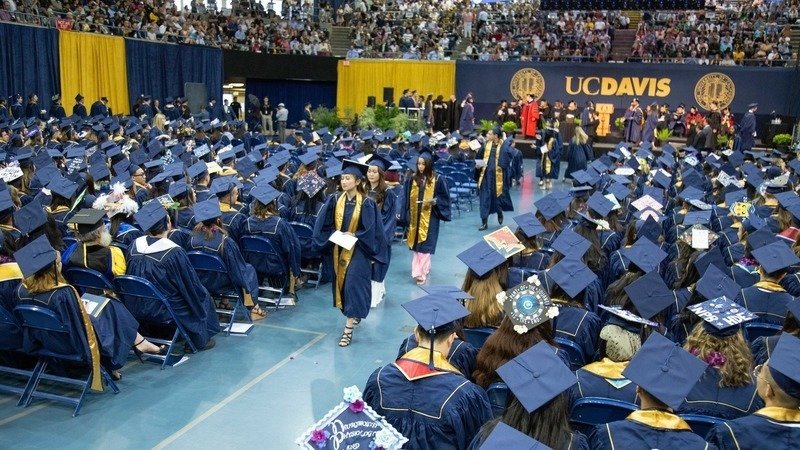
#171 / Cancel That Graduation


A story from yesterday's newspaper pretty much floored me. Since I am teaching, nowadays, at the University of California campus located in Santa Cruz, I know just how much UCSC students (and their families) look forward to graduation day. The same thing is true, of course, at other UC campuses, including the UC campus located in Davis, California. 

What I learned from that article in the Sunday, June 19, 2022, edition of The Mercury News was that this year's graduation ceremonies at UC Davis were simply cancelled, right in the middle of the proceedings. Students were dressed in their robes. Parents and friends had come from all over the state. The ceremonies were being conducted outdoors, and "excessive heat...sickened dozens of people... There were 35 heat-related medical calls and seven people were hospitalized."
 
As people started keeling over from the heat, the administration simply pulled the plug on the ceremonies. They just stopped them, right in the middle. This may well have been a reasonable and responsible course of action, considering what was happening. Heat shock can become heat death, after all. The students may not have been able to "walk the stage," as the expression goes, but at least their parents and grandparents survived the non-ceremony.
 
What was so shocking to me was how vividly this truncated graduation ceremony makes clear the realities of global warming. We can no longer take anything for granted. What we have assumed is a world we can rely on is not a world we can rely on, anymore - not even for something so traditional as a college graduation ceremony. 
 
Another story in the paper reported on massive damage at Yellowstone National Park, caused by flooding. About one billion dollars will be needed to repair the damage. This, too, like the story of birds falling out of the sky in Kuwait, killed by heat, is a consequence of global warming. 

A student entering college during the coming Fall Quarter would normally expect to be graduating four years later. 

If we want that student to graduate (if we want the world we have relied upon to continue to exist) we can't wait another four years to start making changes in what we do. 

BIG changes!
 
 
Image Credit:
https://www.change.org/p/restore-the-uc-davis-2022-undergraduate-commencement-plan-to-the-pre-2020-model