Wednesday, January 31, 2018

#31 / That "Idea" Of Progress


In November 2017, Ursula K. Le Guin reported that her health was "OK." This was what she said in an interview with David Streitfeldpublished in the Los Angeles Review of Books. Le Guin died on January 22, 2018, and I wish her health had been better than just "OK." As a brief appreciation published in The New Yorker makes clear, losing Le Guin was a real loss, though we should be grateful for all she gave us, not peeved that she is no longer here to continue her contributions.

In the interview (which is where I got the image above), Le Guin noted that she was no "progressive." 

You once clarified your political stance by saying, “I am not a progressive. I think the idea of progress an invidious and generally harmful mistake. I am interested in change, which is an entirely different matter.” Why is the idea of progress harmful? Surely in the great sweep of time, there has been progress on social issues because people have an idea or even an ideal of it. 
I didn’t say progress was harmful, I said the idea of progress was generally harmful. I was thinking more as a Darwinist than in terms of social issues. I was thinking about the idea of evolution as an ascending staircase with amoebas at the bottom and Man at the top or near the top, maybe with some angels above him. And I was thinking of the idea of history as ascending infallibly to the better — which, it seems to me, is how the 19th and 20th centuries tended to use the word “progress.” We leave behind us the Dark Ages of ignorance, the primitive ages without steam engines, without airplanes/nuclear power/computers/whatever is next. Progress discards the old, leads ever to the new, the better, the faster, the bigger, et cetera. You see my problem with it? It just isn’t true.

I read this statement about "progress," as Le Guin explains the term, as a viewpoint akin to my own thought that disruption is not, in and of itself, something to be sought after. What is new, bigger, and different is not necessarily going to be "better." 

Wise words from Ursula Le Guin.


Image Credit:
https://lareviewofbooks.org/article/writing-nameless-things-an-interview-with-ursula-k-le-guin/#!

Tuesday, January 30, 2018

#30 / Are We Seeing Democracy's Last Gleaming?


In addition to a couple of articles speculating on Melania Trump's "quiet rebellion" against her president-husband, the January 28, 2018, edition of The New York Times had some other articles worth reading, at least if you like reading about where American democracy might be heading. 

In The New York Times Book Review, Adrian Wooldridge, who is a columnist for The Economist newspaper, reviewed David Frum's book, TRUMPOCRACY: The Corruption of the American RepublicThe Times published Wooldridge's review under this title: "Twilight's Last Gleaming?" Here is how Wooldridge presents one of Frum's main arguments:

Trump grasped that America is suffering from an epistemological weakness as well as economic ones: The line between truth and falsehood is becoming dangerously blurred. ... America’s knowledge elite is partly responsible for this: Armies of postmodern academics had prepared the way for Trump by arguing that truth is a construct of the power elite. But the biggest culprit is technological progress. Digitalization is not only creating a deafening cacophony of voices. It is also making it harder to finance real journalism while simultaneously making it easier to distribute tripe.

In The New York Times Magazine, NPR's Audie Cornish undertook a question and answer interview with  Christiane Amanpour, chief international correspondent for CNN. Amanpour indicated her significant concern about "truth," as well:

United States’ democracy ... is based on knowing the difference between truth and lies. Truth leads to democracy, lies lead to dictatorship and this is where I think people, whether it’s the president or people around him, are not fully aware of the real impact of what they’re saying. It drives wedges between people, and if anything, these recent elections have told us that the population has become so polarized that people can be affected by lies that are peddled and empty promises that are made, tribalistic policies that are rammed down people’s throats, and you have to be really, really careful.

A long Opinion piece by Steven Levitsky and Daniel Ziblatt, both Harvard professors, was published in The Times' main section. Levitsky and Ziblatt pose the following inquiry: "Is Our Democracy Wobbly?" That was the hard copy title; online headlines will differ. Levitsky and Ziblatt hit on another concern, and one I am coming to believe may be central: 

To function well, democratic constitutions must be reinforced by two basic norms, or unwritten rules. The first is mutual toleration, according to which politicians accept their opponents as legitimate. When mutual toleration exists, we recognize that our partisan rivals are loyal citizens who love our country just as we do. 
The second norm is forbearance, or self-restraint in the exercise of power. Forbearance is the act of not exercising a legal right. In politics, it means not deploying one’s institutional prerogatives to the hilt, even if it’s legal to do so.

By calling for "forbearance" in politics, and in political discourse, Levitsky and Ziblatt are also raising the "truth" issue. The political debate and discussion that is central to democracy, and to democratic decision making, is premised on the idea that almost everyone has some claim to "truth." When one "side" decides that its views are "true," and that other opinions are "false," we lose the ability to make meaningful political choices by finding ways to agree about what to do, collectively, when no one really knows "the truth." 

A commitment to "truth" is absolutely required if democracy is to survive. Amanpour is correct. "Truth leads to democracy." She is also correct in saying that when the population is polarized, people can then be affected by lies. If each one of us claims that we, and our "side," are the only ones who really know "the truth," the democratic process, which includes debate, discussion, conflict, and compromise, is stymied before it begins.


Image Credit:
https://www.nytimes.com/2018/01/27/opinion/sunday/democracy-polarization.html

Monday, January 29, 2018

#29 / @FLOTUS


Maureen Dowd, a columnist for The New York Times, devoted her column yesterday to an analysis of Melania Trump's behavior, vis a vis her husband. Her husband, of course, just happens to be the President of the United States.

An "Opinion" piece by Kate Andersen Brower, a CNN contributor and the author of First Women: The Grace and Power of America's Modern First Ladies, also appeared in yesterday's Times. 

Both Dowd and Andersen come to similar conclusions. Dowd believes that Melania Trump's last minute refusal to follow  her husband to Davos is part of her "rebellious vanishing act," and is only one example. Dowd sees that incident as part of the First Lady's intentional effort to critique her husband's character and conduct. She cites the picture below, which Melania published on the first anniversary of the inauguration, as a pictorial "slap" at the president, echoing a physical slapping away of her husband's hand in Israel, another of the actions taken by Melania that Dowd reads as a critique.

Brower  believes that Melania Trump is perpetrating a "quiet rebellion," and the headline on her Opinion column proclaims Melania Trump's "quiet radicalism."

Would it have been beneficial to Donald Trump for his wife to stand beside him in Davos and show a united front, as we have come to expect from first ladies? Absolutely. Does she care? Probably not.

This is, without doubt, the "gossip presidency." It's interesting to speculate about whether the First Lady is trying to do a political critique of her husband, by way of various "indications" of her personal dissatisfaction with how the president conducts himself. However, my own preference would be for all of us to be a little bit more forthright than Melania Trump. Specifically, I would like to see Republican Members of Congress start "slapping away" some of the president's most outrageous pretensions and conduct, and to do so publicly.

Until that happens, we may be stuck with the subterranean signals sent by the First Lady.

My thought? If I were Melania, I'd rather be hanging onto the Marine, too.


Image Credits:
(1) - https://www.nytimes.com/2018/01/27/opinion/sunday/melania-trump-florida-davos.html
(2) - https://theconservativetreehouse.com/2017/01/20/making-marine-recruitment-great-again/

Sunday, January 28, 2018

#28 / Those Self-Help Strategies


I enjoyed an article by "Critic at Large" Alexandra Schwartz, writing in the January 15, 2018, edition of The New Yorker. Titled, "Improving Ourselves To Death," Schwartz' article deconstructs the "self-help" industry, with its vast literature on personal improvement. 

At one point, Schwartz describes the self-help genre as  epitomizing "predatory optimism," which seems about right to me.

Schwartz has received a prestigious prize for her accomplishments as a book reviewer, and she names the names, as she ticks off all the various self-help manuals, guides, and works of inspiration that are trying to tell us (if we will only buy them) that they can make our lives so much better: 


As you can see, and particularly from the last few titles listed (those "non-expletive-deleted" titles), one of the basic themes for self-improvement that Schwartz identifies from the literature is to make sure you are focused on YOU, with the implicit message being that you shouldn't "give a f*ck" about anyone else. 

It is my own observation that everyone does better when we all do better, and that our best route to "self" improvement would be to focus not on the "me," but on the "we." 

Let's get together and make some home, community, national, and world improvements. 

Maybe I should write a book!


Image Credit:
https://www.newyorker.com/magazine/2018/01/15/improving-ourselves-to-death

Saturday, January 27, 2018

#27 / Curable Grievances


Joseph Epstein, writing in The Wall Street Journal, suggests that Oprah Winfrey is "the perfect candidate for Therapist in Chief." 

Epstein's idea of the kind of person who will be successful as a political candidate is a person who can manufacture "curable grievances." The grievances spoken of must relate to the voters' current distress (whatever that might be), and the "cure," of course, will be to elect the candidate who has both identified the grievance, and who has a plausible case for being able to banish it. 

It sounds like Epstein has a pretty good theory in hand to explain the 2016 political success of our most recently elected president. The New York Times, a week or so ago, ran a complete page of letters from those who voted for Mr. Trump in 2016. They still remember the grievances that motivated their vote, and most of them still seem to think that the president is providing the "cure" they hoped for. 

Oprah Winfrey would be providing a different kind of "cure." According to Epstein, who cites to a famous book by social scientist Philip Rieff, "The Therapeutic" has triumphed, and a "sense of well-being" is now the end and objective of our political efforts, rather than our sense of well-being coming as a "by-product of striving after some superior communal end." In that sort of electoral universe, the "grievance" is an increasing feeling of social, political, and economic unease. The cure is "therapy," and Oprah Winfrey, the way Epstein tells it, is our very best national "listener." 

The pull quote in the hard copy edition of the Epstein article said this: "At a time when actual qualifications no longer seem to matter, President Oprah is entirely plausible." That seems right to me.

As for my own views, I keep thinking that my well-being is going to come from successful efforts actually to solve real problems. I'm not looking for a therapist.


Image Credit:
https://www.wsj.com/articles/the-perfect-candidate-for-therapist-in-chief-1516320352

Friday, January 26, 2018

#26 / Bitcoin In The Bedroom


Consider the lament of Raphaela Lucsok, as documented in a recent article in The Wall Street Journal:  

Raphaela Lucsok put up with her husband investing about $100 in bitcoin that the couple couldn't afford. She didn't argue when he quit his stable job for a bitcoin startup and even went along with his insistence to eat only at the (very few) restaurants that accept the digital currency... 

But here is where Raphaela had to draw the line: 

She took a stand recently when he started bringing his phone to bed to monitor bitcoin's price. "A strong restriction on cellphone use in our bedroom had to be imposed..."

My father, Philips B. Patton, was born and died before the birth of bitcoin, but he anticipated its arrival, and provided me with an inoculation. 

For those who have been bitten by the bitcoin bug, and who find themselves scratching that itch, whether inside or outside the bedroom, I think it would be wise for you to consult the book pictured below. My father gave me a copy when I was quite young. It's a classic! It may make you think about tulips (and bitcoin) in a whole new way: 


A rather compelling article, "Beyond The Bitcoin Bubble," ran in The New York Times Magazine last weekend. Its author, Steven Johnson, concurs with me that it would be wise to be cautious, stating that bitcoin "is in the middle of a speculative bubble that makes the 1990s internet I.P.O. frenzy look like a neighborhood garage sale."

While I definitely think we should pay attention to the advisory contained in the Johnson article about bitcoin speculation, the article also proffers some mind-bending thoughts about how blockchain technologies might save us all from the "super states" of Google and Facebook.


Image Credits:
(1) - https://www.dreamstime.com/stock-photo-bitcoin-bed-not-moving-exchange-markets-going-to-sleep-image93210297
(2) - http://www.brilliantcorners.net/?p=96

Thursday, January 25, 2018

#25 / Those Digital "Super States"


Julian Assange (pictured above) is the founder of Wikileaks. Both he and Wikileaks get mixed reviews. A profile in the August 21, 2017, issue of The New Yorker, for instance, "Julian Assange, a Man Without a Country," has both good things and bad things to report about Assange. 

I was struck by a recent blog posting by Caitlin Johnstone, "Assange Keeps Warning Of AI Censorship, And It’s Time We Started Listening." Johnstone is a self-described "rogue journalist," and is a radical voice on the progressive side of the blogging spectrum. She doesn't have much use for establishment Democrats, and evidences some periodic sympathies for the Trump "base." She is not everyone's cup of tea, in other words.

Johnstone cites to a January 16, 2018, statement by Assange that is reproduced below. Read Johnstone's posting if you are as intrigued as I was by two things I gathered from the Assange statement: 

First, Assange thinks that Google and Facebook are "digital super states," which he ranks right up there with the Chinese government. 

Second, Assange says that "discourse" is humanity's immune system for existential threats. 

I, personally, think Assange is right on target on both those observations!


Image Credits:
(1) - https://www.newyorker.com/culture/photo-booth/behind-the-portrait-julian-assange
(2) - https://twitter.com/JulianAssange/status/953437902335283201/photo/1

Wednesday, January 24, 2018

#24 / Wizards And Prophets


A new book, released yesterday (and pictured below), makes an argument for, and an argument against, the proposition that the Earth's finite carrying capacity means that economic growth must, at some point, stop. 

That, at least, is how the book is characterized in a review by William Easterly,  a Professor of Economics at New York University. Easterly's review is titled, "Beyond the Limits of the Earth With 'The Wizard and the Prophet.'" The review appeared in the January 20-21, 2018, edition of The Wall Street Journal


I like the metaphor, with "The Prophet" speaking for an ecological approach, and with "The Wizard" arguing that technology and science are more than adequate to keep ahead of the dire predictions of  Thomas Malthus

Though I think I am probably safely on "The Prophet" side of the debate, there is no doubt that those placing their faith in "The Wizard" have some good arguments. The review, in the nation's premier publication for the business class, definitely makes the argument that committing human civilization to an unceasing pursuit of "economic growth" will not lead to famine and mass starvation, or to other distressing results.  

I would say we probably need to wait a bit to have a better appreciation of how things will actually work out. If global warming, which is definitely associated with population growth, and even more with the growth in energy use by each individual within the population, ends up by causing snow and ice pretty much to disappear from the mountains, there is a real chance that massive famine will be forthcoming in short order. There is a good argument, in fact, that we can already discern how this works, in Africa

Having not read the book, I can't really comment on who wins the battle in this duel of the "remarkable scientists," if either, in fact, "wins." William Vogt is the "captain of Team Prophet." Norman Borlaug represents "Team Wizard." Easterly tries to give them both credit, as it appears Mann does, too: 

The excessive alarmism of Prophets helped inspire the modern environmental movement, but implicitly opposed the rise in living standards of billions of poor people. Wizards, by contrast, helped defy the limits to growth to make the escape from poverty possible, but they may have encouraged complacency about environmental problems that threaten us today. The purpose of Mr. Mann’s indispensable book is not to declare a winner, but—with luck—to help us find the right mixture of Prophets and Wizards in the future.

Credit is certainly owing on both sides of the debate, but I come down with "The Prophet" for one reason only. The approach taken by "The Prophet" is premised on the idea that we depend on the Earth, not the other way around.

Despite all the technical wizardry we can muster - and "The Wizard" does do some wondrous stuff - we are ultimately dependent on the World of Nature, which we did not create. When we try to  tell ourselves that we can "wizard our way out" of that radical dependence, we may be telling ourselves stories, and while these stories may make us feel better, they can send us astray. 

Just how far astray our stories may take us can be gleaned from an interview with the author of The Wizard and the Prophet, appearing in Pacific StandardIn that interview with Kate Wheeling, Charles C. Mann cites to the late biologist, Lynn Margulis, and provides this sobering assessment: 

She basically thought that both wizards and prophets are kidding themselves. The reason is that we're a successful species, and the laws of biology are that successful species wipe themselves out. When the protozoa are in the petri dish multiplying like crazy, they don't see the edge of the petri dish approaching and say, "Oh wow, we better calm down here." They just go right to the edge of the petri dish, they hit the wall, and then they all die. And [Lynn] said that's the way life is, that's the way living creatures are, and to think that people are somehow special and profoundly different from protozoa is ridiculous and completely contrary to the spirit of biology, which is that all species are the same with regard to these fundamental natural processes. 

Margulis was a proponent of the Gaia hypothesis, and her allegiance was to the World of Nature, writ large. As for humans, her judgment might be summed up by the first line in the Pacific Standard interview, anticipating Margulis' observation just quoted:

Here's the thing about successful species: Eventually, they all wipe themselves out.

I don't believe in the inevitability of anything when we touch upon the human, but we'd better pay attention to what Margulis is saying, if we'd like to be an exception to her rule.


Image Credits:
(1) - https://www.rockpoolpublishing.com.au/witches-and-wizard-popularity-grows
(2) - https://www.crosswalk.com/home-page/todays-features/quiz-which-old-testament-prophet-are-you.html
(3) - https://www.amazon.com/Wizard-Prophet-Remarkable-Scientists-Tomorrows/dp/0307961699

Tuesday, January 23, 2018

#23 / The Tower And The Square


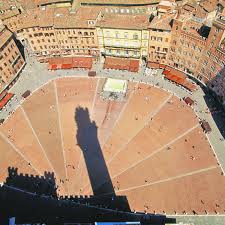
The Piazza del Campo in Siena, Italy
Basically, I am writing this posting because I like the picture, which I find evocative. The image above appeared in the January 13-14, 2018, hard copy edition of The Wall Street Journal. It was associated with a book review by Deirdre N. McCloskey

McCloskey advertises herself as a "well-known economist and historian and rhetorician," with her website stating that she has written seventeen books and around four hundred scholarly pieces on a wide-ranging set of topics, from technical economics and statistical theory to transgender advocacy. McCloskey self-identifies as a “conservative economist, Chicago-School style," and further states that she is "a literary, quantitative, postmodern, free-market, progressive-Episcopalian, Midwestern woman from Boston who was once a man."

Whatever other merits her scholarship may have, McCloskey writes a good review, at least based on the one I am referencing here. The book she has reviewed is The Square and the Tower, by Niall Ferguson, who is "a British historian and political commentator." According to McCloskey, Ferguson's book is "brilliant."

I don't know whether McCloskey is right about the brilliance of Ferguson's book, since I haven't read it. I do, however, like the idea of analyzing social, political, and economic arrangements based on a Tower/Square dichotomy. It seems like a good metaphor to me, at least as depicted in the photo of the Piazza del Campo. The shadow of the "Tower" looms darkly and ominously over the sunlit "Square," with the Tower standing for "hierarchy" and the Square standing for "networks," which presumably means ordinary people organized at the individual level. 

According to McCloskey, Ferguson has a negative view of all those unruly networks: 

The lesson of history is that trusting in networks to run the world is a recipe for anarchy: at best, power ends up in the hands of the Illuminati, but more likely it ends up in the hands of the Jacobins,” and we bring out the guillotines. “It is better to impose some kind of hierarchical order on the world and to give it some legitimacy,” [Ferguson] contends. He also declares himself against “the confident assumptions . . . that there is something inherently benign in network disruption of hierarchical order.”

Mr. Ferguson’s book studies in fascinating detail how the Square undermines the Tower, for good or ill—regularly ill, he says. In Siena, Italy, Mr. Ferguson notes, the tower for the city hall overshadows the central square (once the central market) where the famous and un-refereed Palio horse race plays out twice yearly, as if the rulers were saying, “Play on, mere populo, in spontaneously agreed-upon bets on horses or on business deals. But remember that it’s the hierarchy in the tower that runs the show.” Until a new network undermines it.

While I agree that there is positive value in organization and order, the attributes given to the Tower in Ferguson's metaphor, and while I also agree that the disruption of existing political, social, and economic arrangements is never automatically benign, I take pretty much the opposite view from Ferguson. To my mind, the genuine life of any society springs from this truth: we are all in this life together. The Square, in other words, is where we begin everything, and the Tower is a social, political, and economic construction that, once built, often comes to assert that its importance is greater than the existence of all those who brought it into being. When that happens, when the shadow falls on that sunny public space, it chills and discourages human activity, and yet it is from the Square that all life and all human creation must ultimately emerge. 

When we relinquish our political initiatives to the Tower, cold tyranny and oppression will surely follow. That truth, I think, is what is so powerfully represented in that metaphoric picture of the Tower's shadow on the Square in Sienna. 

That shadow of the Tower is casting its chill darkness everywhere, these days. That shadow extends far beyond Sienna. I feel it here. 

When we feel that chill, when the shadow strikes down upon our public space, that is not the time to flee the Square. As the Tower looms, and casts its ominous, cold, and dark shadow on us, that is not the time to fly away, or to seek refuge in some private venue. 

When our public Square is invaded by the shadow of the Tower, that is the time when we must bring our friends - our many, many friends. We must come the Square, with our friends, and gather there. And then, in the warmth of our coming together, we can decide what we will do, together, to rearrange the architecture of the Tower's oppression.


Image Credit:
https://graphics.wsj.com/image-grid/Books-January-13/

Monday, January 22, 2018

#22 / On The Sidewalks Of Toronto


Sidewalk Labs is an "Alphabet Company." Its ambition is to "imagine, design, test, and build urban innovations to help cities meet their biggest challenges," and to "improve quality of life." Toronto is test case number one. 

If you would like to know more, you can read what Sidewalk Labs has to say about its efforts in Toronto. Just click this link. There are lots of pretty pictures on the Sidewalk Labs website (see above).

If you'd like a third-person (and hence a bit more critical) view, click on this link for a New York Times article by Ian Austen, who reports for The Times about Canada. Austen concludes that the cities that Sidewalk Labs is envisioning may result in an updated version of 1984. This is primarily because of the baked-in, total surveillance that Sidewalk Labs assures us is going to "improve quality of life."

Sensors inside buildings will measure such things as noise, while an array of cameras and outdoor sensors will track everything from air pollution to the movement of people and vehicles through intersections. Nothing is too prosaic to analyze: Toilets and sinks will report their water use; the garbage robots will report on trash collection. Residents and workers in the area will rely on Sidewalk-developed software to gain access to public services; the data gathered from everything will influence long-term planning and development.

Knowledge (information) is power. There is no doubt that lots of (possibly) good things can be can be accomplished if adequate information is available. Speaking to my use of "possibly," in parentheses, The Times article suggests that the Quayside development proposed for Toronto may end up allowing residents to benefit from living in what amounts to a "gated community," but without the gates: 

The data, Ms. Robinson warned, might be used to limit or discourage the otherwise legal use of public spaces by homeless people, teenagers or other groups.

Whether or not that is an improvement to "quality of life" depends on who you are. 

I am a bit leery, personally, about pretty picture schemes to eliminate social problems. As a side effect, our schemes to do that often eliminate what is most "human" about us, our erratic, unpredictable, spontaneous, discomfort-making actions and activities. 

What some people call "freedom."


Image Credit:
https://www.sidewalklabs.com

Sunday, January 21, 2018

#21 / Why Liberalism Failed


A new book by Patrick J. DeneenWhy Liberalism Failed, is described below by its publisher, Yale University Press:

Of the three dominant ideologies of the twentieth century—fascism, communism, and liberalism—only the last remains. This has created a peculiar situation in which liberalism’s proponents tend to forget that it is an ideology and not the natural end-state of human political evolution. As Patrick Deneen argues in this provocative book, liberalism is built on a foundation of contradictions: it trumpets equal rights while fostering incomparable material inequality; its legitimacy rests on consent, yet it discourages civic commitments in favor of privatism; and in its pursuit of individual autonomy, it has given rise to the most far-reaching, comprehensive state system in human history. Here, Deneen offers an astringent warning that the centripetal forces now at work on our political culture are not superficial flaws but inherent features of a system whose success is generating its own failure.

Tod Lindberg has reviewed the book for The Wall Street Journal, and I don't think he would disagree with what the Yale University Press has to say. Lindberg's review, as I read it, seems to say that the "liberalism" that Deneen discusses, and that Deneen proclaims a failure, is really what I would call "individualism." Specifically, Lindberg says this: 

[Deneen] sees evidence of liberalism’s failure in the 2008 financial crisis; the new extremes in economic inequality; the reckoning due human beings from climate change; and the collapse of public confidence in self-government. All result, he says, from the rampant unchaining of human appetite as a matter of individual right. Liberalism fails, Mr. Deneen says, because “at the end of the path of liberation lies enslavement. Such liberation from all obstacles is finally illusory, for two simple reasons: human appetite is insatiable and the world is limited.”
Having spent twenty years as a public official combatting the idea that unconstrained "growth" is good (because, in fact, "human appetite is insatiable and the world is limited"), I am in agreement with this insight. 

The New York Times has also commented on Why Liberalism Failed. Ross Douthat has this to say for The Times

Deneen comes as a Jeremiah to announce that Tocqueville’s fear that liberalism would eventually dissolve all these inheritances, leaving only a selfish individualism and soft bureaucratic despotism locked in a strange embrace, may now fully be upon us. Where it once delivered equality, liberalism now offers plutocracy; instead of liberty, appetitiveness regulated by a surveillance state; instead of true intellectual and religious freedom, growing conformity and mediocrity. It has reduced rich cultures to consumer products, smashed social and familial relations, and left us all the isolated and mutually suspicious inhabitants of an “anticulture” from which many genuine human goods have fled.

Again, I can't think of anything to object to in what Douthat says about Deneen's book. Thus, I conclude that I would probably like the book (and maybe I ought to order myself up a copy and find out for sure). Still, I am rankled by the title. Using the word, "liberalism," it seems to me, needlessly conjures up those "liberal" vs. "conservative" debates that have been the way political discussions have been organized through most of my life. Those rather "fruitless" debates, let me say! 

I, personally, don't believe that the three dominant political ideologies of the twentieth century were fascism, communism, and "liberalism." I think that third ideology is "democracy." And democracy has not failed. At least, not to my mind!

What has failed is an effort to build a political, social, and economic system on the idea that every individual should be encouraged do whatever he or she thinks will provide that individual with the greatest individual benefit. I call that "individualism," not "liberalism," and by whatever name, that idea has failed. 

We are not only individuals; we live together in a world that we create through our common action. I tend to call a system that recognizes that truth, "democracy," and as the shadows of centralized, authoritarian power extend, it is our only hope.


Image Credit:
https://www.wsj.com/articles/review-a-radical-critique-of-modernity-in-why-liberalism-failed-1515790039

Saturday, January 20, 2018

#20 / Mr. Nice Guy?


Whether or not Donald J. Trump and his campaign "colluded" with Vladimir Putin, President of the Russian Federation, to influence the 2016 United States presidential election in Trump's favor, is not yet clear. Many Democrats seem to be extrapolating from smoke to fire, and have made up their minds that there was such collusion, but that isn't, actually, how our legal system, or even "science," works. Appearances can be deceiving. Maybe, in this case, they are. 

President Trump says there was "no collusion," and he says that repeatedly! Such repeated denials, of course, mean nothing - particularly taking into account the president's well-known propensity for prevarication. Still, maybe there really wasn't any collusion about the election. Maybe money laundering, not campaign assistance, was what was discussed in the various meetings that are now public knowledge. Or, maybe something else was going on! Let's wait for what radio commentator Paul Harvey used to call "the rest of the story." 

As we do wait for some more definitive word about why Trump family members and campaign representatives were in significant contact with various persons connected to Vladimir Putin and the Russian government, it might be well to consider what kind of a guy Vladimir Putin really is. 

Our current president has been known to shower Mr. Putin with fulsome praise. A 2015 book by Garry Kasparov, who was the world's number-one-ranked chess player for twenty years, presents a contrary view. Kasparov thinks that our president's words of praise are just one more example of how successful Putin has been in convincing governmental officials in Western democracies (including former President Obama) that Putin is just one more democrat like they are, and that the Russian President is really desirous of being a great partner in various kinds of governmental good works. 

Kasparov calls that the "audacity of false hope." He thinks that Putin is a world class dictator, right up there with Hitler and Stalin, and that we had better wise up before it's too late. Kasparov's book is titled, "Winter is Coming," referencing the popular television series Game of Thrones (and the books that came before that). 

Kasparov's book appeared in my house as a Christmas present, and I've just read it. I don't really know enough about the former Soviet Union, and the current situation in Russia, and in the former parts of the Soviet Union, to be able to evaluate the book in any definitive way. However, when journalists and others who oppose Mr. Putin keep turning up dead, in suspicious circumstances, that is not a good sign. 

Our current president is wrong in many ways. I think he is wrong to be praising Putin.

Kasparov makes a good case that Putin is no "Mister Nice Guy!"


Image Credits:
(1) - http://time.com/money/4641093/vladimir-putin-net-worth/
(2) - https://www.amazon.com/Winter-Coming-Vladimir-Enemies-Stopped/dp/1511365447

Friday, January 19, 2018

#19 / Disruption As A Service


I follow new technologies pretty closely, both as a user, and as someone who has an academic interest. I teach a course entitled, "Privacy, Technology, And Freedom," which is the "Capstone" thesis course in the Legal Studies Program at the University of California, Santa Cruz. That means I had better know what sort of new technologies are out there, and the opportunities and dangers these technologies may present to our social, economic, and political system.

Last month, I quickly clicked on an article with the following headline: "Disruption as a service: Where the tech industry will pounce in 2018."

Using the word "pounce" calls up an image of a tiger taking down its prey (and new technology does seem to appear in that guise, often enough). The article, however, was more sedate and studied than the headline. Featured were discussions of:

(1) Security
(2) IoT - the "Internet of Things"
(3) A rumored Apple Touchscreen Laptop
(4) 5G Wireless
(5) Data as "Currency," and
(6) AI - Artificial Intelligence.

As it turned out, there was nothing earthshaking in this article, which appeared in a popular industry publication. I realized, when I thought about it, that what made me so quick to track down the article was the reference to the word "disruption" in the headline.

I don't really see "disruption" as a "service." Whether it is new chemicals we are talking about, or new "technologies," I believe that we would be wise to follow that "precautionary principle" I have talked about in this blog on more than one occasion. I was pleased to see, in an Op-Ed appearing in today's San Jose Mercury News, that some business people agree, with respect to the business impacts of "disruption" as a goal. 

Living organisms always aim for a steady state, or "homeostasis," to use a medical term. Departures from such "steady state" approach put life itself at risk. Unbridled "growth," for instance, is a case in point. 

While "mutations" sometimes provide some positive gains for a species, most mutations do not. Aiming for "mutation" and "disruption," whether biologically, or socially, economically, and politically, is more "danger" than "opportunity."


Image Credit:
http://www.zdnet.com/article/disruption-as-a-service-where-the-tech-industry-will-pounce-in-2018/

Thursday, January 18, 2018

#18 / We Will All Go Together


Tom Lehrer, pictured above, taught mathematics at the University of California at Santa Cruz. He also wrote and performed a series of satiric songs, many of them about nuclear war. You can indulge yourself in one of my favorites by clicking on the video link at the bottom of this blog posting. Start your day off with an upbeat song!

Tom's songs came to mind as I read The New York Times yesterday. In the hard copy edition that landed on my front lawn, a page one headline reported that a "Pentagon Plan Would Expand Nuclear Policy." Online headlines may differ.

In short, our current president and his administration, ever watching out for the interests of the American people, have decided that cyberattacks affecting Americans would be a good reason to launch a nuclear war. That's right! Those pesky cyberattacks are SO infuriating!

Gary Samore, who was a top nuclear adviser to President Barack Obama, said much of the draft strategy “repeats the essential elements of Obama declaratory policy word for word” — including its declaration that the United States would “only consider the use of nuclear weapons in extreme circumstances to defend the vital interests of the United States or its allies and partners.” 
But the biggest difference lies in new wording about what constitutes “extreme circumstances.” 
In the Trump administration’s draft, those “circumstances could include significant non-nuclear strategic attacks.” It said that could include “attacks on the U.S., allied, or partner civilian population or infrastructure, and attacks on U.S. or allied nuclear forces, their command and control, or warning and attack assessment capabilities.”
The draft does not explicitly say that a crippling cyberattack against the United States would be among the extreme circumstances. But experts called a cyberattack one of the most efficient ways to paralyze systems like the power grid, cellphone networks and the backbone of the internet without using nuclear weapons.

Frankly, I am not much of a fan of nuclear war no matter what the provocation, and I don't find the Obama language particularly comforting. Check out the Trump Administration proposed changes, though. If you think that "normalizing" the use of atomic weapons is the right direction for our nation, you can give a cheer for our current president. 

If you don't, console yourself with the positive view advised by Tom Lehrer. 

Click that video for that positive view, and particularly if you aren't familiar with this song:


Image Credits:
(1) - https://youtu.be/oRLON3ddZIw
(2) - https://youtu.be/frAEmhqdLFs 

Wednesday, January 17, 2018

#17 / Dos Vidas (Two Lives)


As I periodically note in this blog, there are two ways that we live in this world, and both are important. We are both "observers" and we are "actors." Here is Jennifer Stitt, a graduate student in the history of philosophy at the University of Wisconsin-Madison, writing in the journal Aeon:

Before you can be with others, first learn to be alone 
In the 20th century, the idea of solitude formed the centre of Hannah Arendt's thought. A German-Jewish émigré who fled Nazism and found refuge in the United States, Arendt spent much of her life studying the relationship between the individual and the polis. For her, freedom was tethered to both the private sphere - the vita contemplativa - and the public, political sphere - the vita activa. She understood that freedom entailed more than the human capacity to act spontaneously and creatively in public. It also entailed the capacity to think and to judge in private, where solitude empowers the individual to contemplate her actions and develop her conscience, to escape the cacophony of the crowd - to finally hear herself think.

Stitt's article is worthwhile reading. Being sure that we spend some time "alone," actually thinking and contemplating both the existing realities of our world, and the possibilities we see for changing it, is absolutely critical for any effective politics. And I do think that Stitt is right. Such thoughtful contemplation is in rather scarce supply, as we search the horizon of what exists now. 

In the end, however, after we contemplate, and after we think, we do need to act, and in the political world which we most immediately inhabit, we need to act together.

Action without contemplation = fiasco. 
Contemplation without action = despair!


Image Credit:
https://aeon.co/ideas/before-you-can-be-with-others-first-learn-to-be-alone

Tuesday, January 16, 2018

#16 / Community Rights


In These Times posted an article on December 29, 2017, that asked this question: "Can The Community Rights Movement Fix Capitalism?"

Wouldn't that be great!

The article was written by Thomas Linzey, a prime mover and shaker in the Community Rights US organization, and the executive director and co-founder of the Community Environmental Legal Defense Fund (CELDF). As might be expected, Linzey is holding out high hopes! 

Here is a brief description from the Community Rights US website, explaining the idea: 

In 1999, CELDF made a dramatic turn in its public interest environmental law work when it stopped being involved with more conventional single-issue one-corporate-harm-at-a-time legal defense work through the regulatory arena of law, and instead began to help rural communities to write paradigm-shifting laws that banned (rather than regulated) harmful corporate activities, and challenged for the first time the legitimacy of corporations exercising constitutional so-called “rights”. It was at this point that the movement took on the name Community Rights, a name that has since stuck. 
It all began in the conservative family farming community of Wells Township, Pennsylvania, when the local farmers rose up to stop a massive farm factory of hogs from being built in their township. Their township supervisors unanimously passed an anti-corporate-farming ordinance that directly challenged three structures of law that the farmers considered to be illegitimate – corporate constitutional “rights”, state preemption, and Dillon’s Rule. From there, the movement took off across rural Pennsylvania, rural Maine, and beyond. 
Fast forward to the present, and there are now more than 200 communities and counties in nine states that have successfully passed Community Rights ordinances. And so far, only about 5% of these places have had their local ordinances legally challenged.

The "community rights" idea is not some new or innovative experiment. In essence, it is good old American "democracy." We are all individuals, of course, but we are not only individuals. We are also members of a community, and "politics," leading to the enactment of "laws," is the way we "govern" what happens in the communities in which we live. 

Our communities have "rights," just the way individuals do. What is the basic "right" that communities have? The right of "self-government." We have the right, through our local lawmaking, to decide what will happen, or what will not be allowed to happen, in our local communities. 

In Santa Cruz County, in 1978, the people voted on Measure J, enacting a growth management system that said, among other things, that commercially viable agricultural land located in Santa Cruz County could be used only for agriculture. As far as I am aware, no other local community has ever taken that step. It was an important step, too, and has largely shaped the development (or, rather, non-development) of Santa Cruz County since that time.

The people of Santa Cruz County had the "right" to do that. So, here, and in every local community around this country, it's time to look around for what's next!


Image Credit:
http://communityrights.us

Monday, January 15, 2018

#15 / Contrary Forces


David Brooks titled his January 2, 2018, column in The New York Times, "The Retreat To Tribalism." His thesis is that the United States has gone "from an identity politics that emphasized our common humanity ... to an identity politics that emphasizes having a common enemy." In other words, it seems to be true, according to Brooks, that the groups with which we identify are increasingly defined by what the group is against, rather than by what the group is for.

Undoubtedly, there is truth in what Brooks says, though I believe the reality of our social, political, and economic situation is more complex than what the quoted statement might suggest. What attracted me to Brooks' column was not so much its message, but the metaphor he used, in talking about social cohesion and social breakdown.

Brooks employed the metaphor of "centrifugal force," versus "centripetal force," as a way of analyzing the state of our society. I do think it's useful to take account of these contrary forces in considering the world around us, and our own place within it. Are things bringing us together, or driving us apart? And what are we doing?

My contention, often expressed in this blog, is that, "we are in this together." That is true whether we like it or not, so we might as well like it. The ultimate reality of our human existence is that we depend upon each other, and as Martin Luther King, Jr. so accurately told us:

We must all learn to live together as brothers, or we will perish together as fools.

As we evaluate and critique others and ourselves, as we participate in actions of various kinds, it would be wise to think of Brooks' contrary forces. Are we helping to create a centripetal force that can bind us in a common enterprise, or are we pulling the world apart?

Martin Luther King, Jr., who can never be charged with any inclination to accept the unacceptable, has wise advice. Advocacy and action do not need to be centrifugal in either intention or effect!


Image Credit:
https://www.nytimes.com/2018/01/01/opinion/the-retreat-to-tribalism.html

Sunday, January 14, 2018

#14 / Before It's Too Late?


"Just How Stupid Is Trump?" That's the title of an opinion piece published on January 8, 2018, by Robert Reich. Reich served as Secretary of Labor under President Bill Clinton, and is now employed by the University of California. He is, besides holding down his university position, a prominent political pundit. Reich doesn't think that President Trump is necessarily stupid, but he does think that our president poses "a clear and present danger to America and the world." 

Reich concludes his article by saying:

The 25th Amendment must be invoked before it’s too late.

The 25th Amendment is pretty complicated. Click the link if you would like a briefing on how it works. My own sense is that neither the 25th Amendment nor an impeachment of the president is going to rescue the nation (and the world). This is also the conclusion of The New York Times editorial board. On January 10th, quite possibly in direct response to what Reich said, The Times ran an editorial with the following title: "Is Mr. Trump Nuts?

Is he "nuts," or is he "stupid," and what should we do about it? The Times evaluates both impeachment and the use of the 25th Amendment, and comes to the following  conclusion, which I believe is right on target:

The best solution is the simplest: Vote, and organize others to register and to vote. If you believe Donald Trump represents a danger to the country and the world, you can take action to rein in his power. In November, you can help elect members of Congress who will fight Mr. Trump’s most dangerous behaviors. If that fails, there’s always 2020.

The fact that we have placed a highly unsuitable person in charge of the Executive Branch of our government does not mean that we our normal governmental processes are no longer functional. In fact, they are!


Image Credit:
http://www.moviesforyourmind.net/pickford-word/category/donald-trump

Saturday, January 13, 2018

#13 / My Celebrity Can Beat Your Celebrity


If I were forced to choose between billionaire celebrities for president, I would definitely choose Oprah Winfrey over Donald Trump. However, it does strike me that we, as a self-governing nation, when we are casting around for presidential candidates, should be looking to those who have previously been involved in the self-government process, and who have actually represented voters, and who have demonstrated their ability to make our self-government process work.

I hope both Ms. Winfrey and the Democratic Party come to this same conclusion!


Image Credit:
http://www.businessinsider.com/oprah-running-for-president-2020-trump-2018-1

Friday, January 12, 2018

#12 / What This Guy Doesn't Get


The picture above, of Elon Musk, comes from an article titled, "What Elon Musk Doesn't Get About Urban Transit." Jarrett Walker, who wrote the article, is a transit expert. 

Walker's article is relatively short, and is definitely worth reading, if you care about transportation policy. In summary, Walker says that Musk is wrong about transit because Musk evaluates transit from an "individual" instead of from a "social" perspective.

That difference between "ME" and "WE" makes all the difference in the world. Building good transit system is only one example of where "individualism" falls short!

Notes for further discussion:

  • Health Care
  • Land Use
  • Education
  • Etc.


Image Credit:
https://www.citylab.com/transportation/2017/12/what-elon-musk-doesnt-get-about-urban-transit/548843/